
Learn about the distinctive Pesquet’s parrot, including its habitat, diet, behaviour, and conservation status. Discover why this rare bird is captivating bird enthusiasts and conservationists alike.Read More
All About Pesquet’s Parrot
Pesquet’s Parrot, also known as the Dracula Parrot or the Vulturine Parrot, is a distinctive and striking bird native to the rainforests of New Guinea. Here are some key characteristics of this unique parrot species:
Appearance of Pesquet’s Parrot
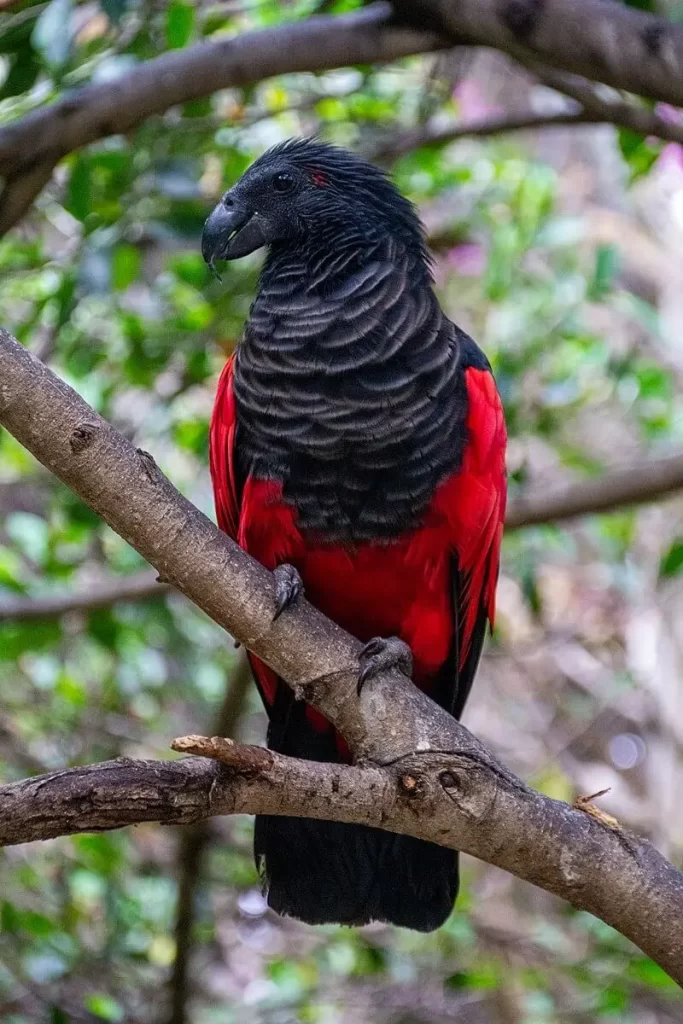
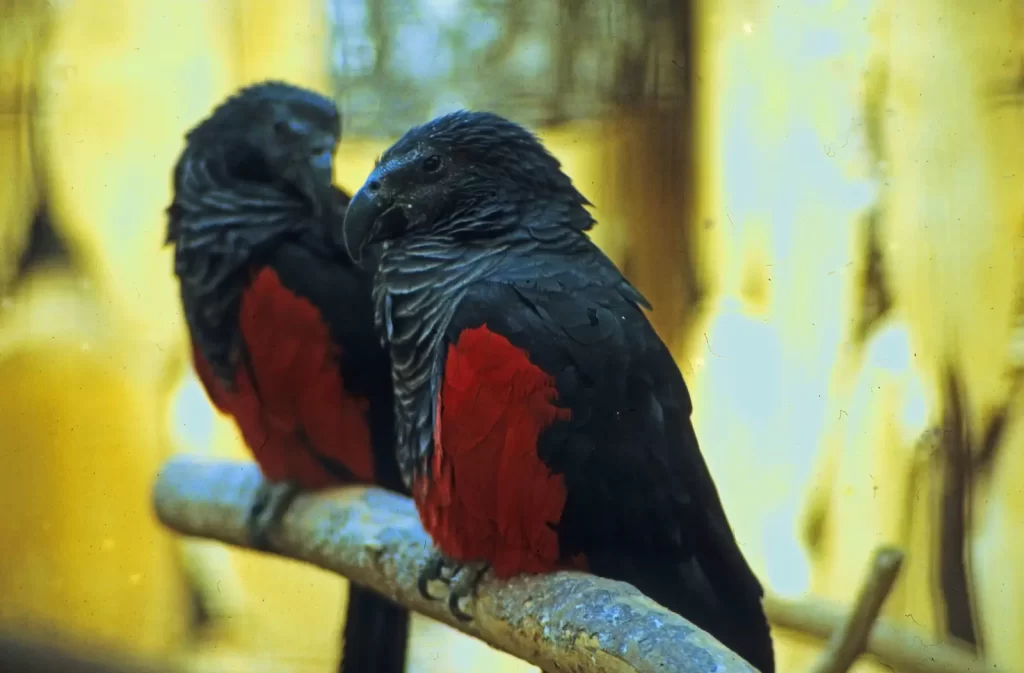
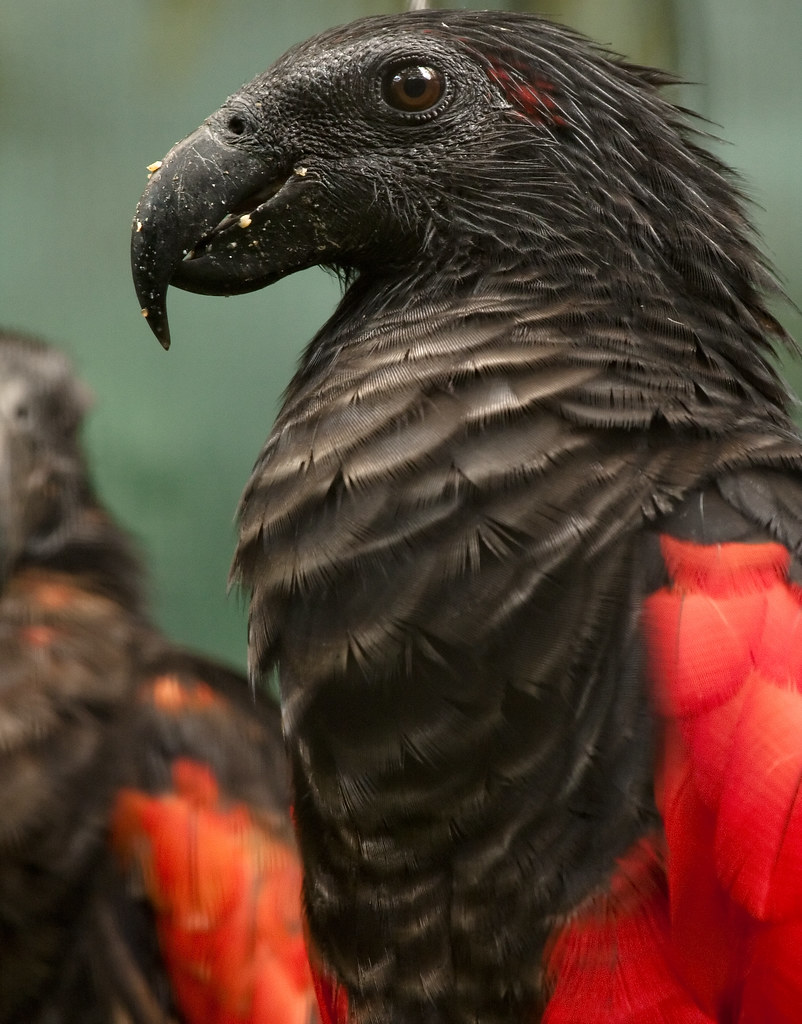
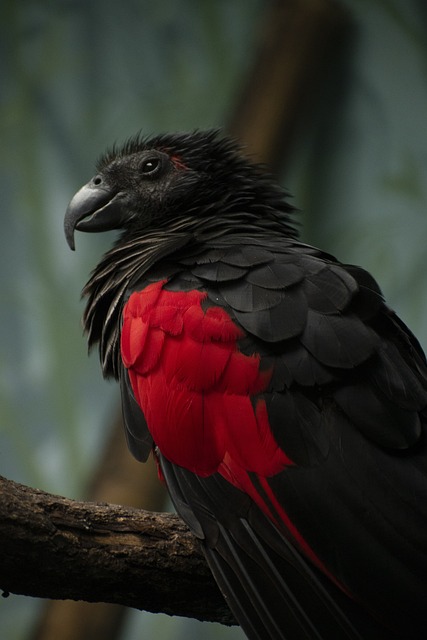
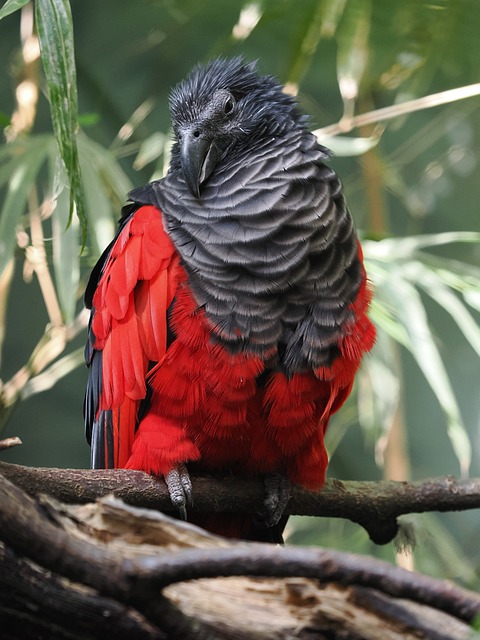
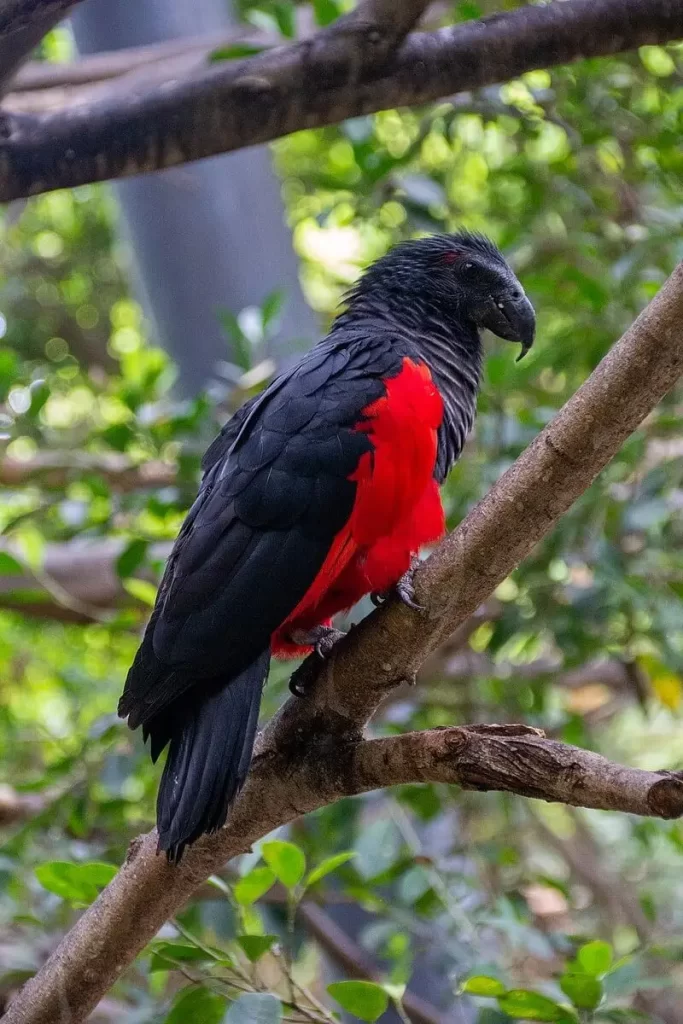
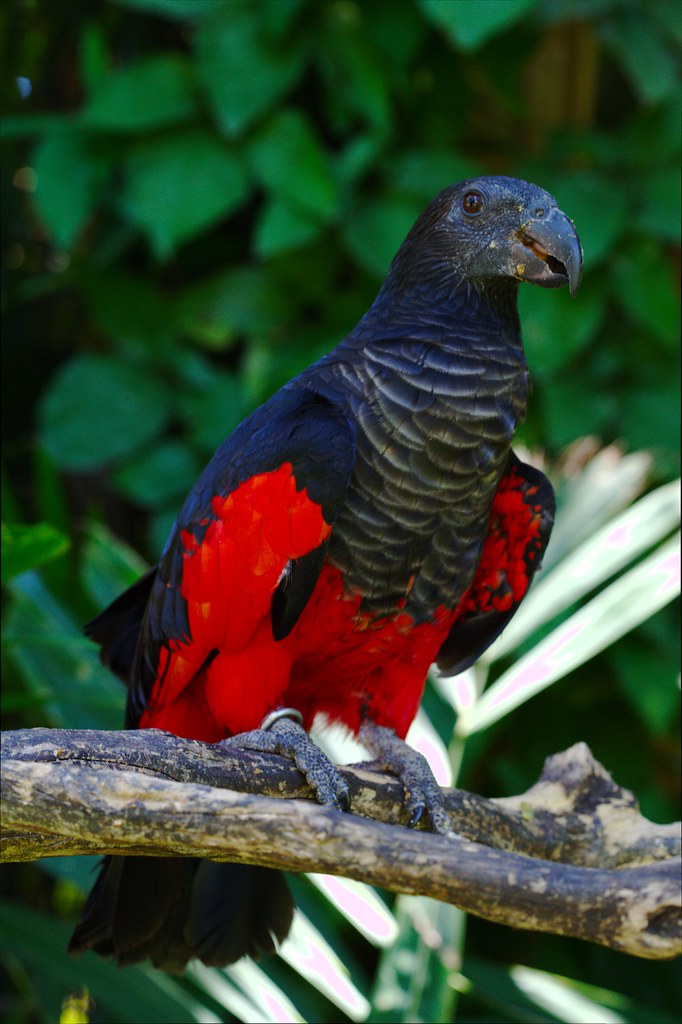
The Pesquet’s parrot is a large parrot with a total length of approximately 46 cm (18 in) and a weight of 680–800 g (24–28 oz). Its plumage is black, with greyish scaling to the chest, and a red belly, uppertail coverts and wing-panels. The adult male has a red spot behind the eye, which is not seen in the adult female. Compared to most other parrots it appears unusually small-headed, in part due to the bare black facial skin and the relatively long, hooked bill, an adaptation for its fruit-based diet. This rather vulture-like profile is the reason behind its alternative common name.
Behaviour of Pesquet’s Parrot
The Pesquet’s parrot is a highly specialized frugivore, feeding almost exclusively on a few species of figs. Flowers and nectar have also been reported. In parts of its range, it is seasonally nomadic in response to the availability of fruits. The bare part of the head is presumably an adaptation to avoid feather-matting from sticky fruits. Little is known about its breeding habits in the wild. Typically it lays two eggs in a nest in a large, hollow tree. It is typically seen in pairs or groups up to 20 individuals. In flight, it alternates between rapid flapping and short glides.
Diet of Pesquet’s Parrot
These parrots are specialized frugivores, meaning they primarily feed on fruits. They have a unique dietary preference for figs, which make up a significant portion of their diet. They may also consume other fruits, seeds, and occasional insects.
Breeding of Pesquet’s Parrot
Pesquet’s Parrots are believed to be monogamous breeders, forming long-term pair bonds during the breeding season. They construct their nests in tree hollows, where the female lays a small clutch of eggs. Both parents take turns incubating the eggs and caring for the chicks.
Conservation Status of Pesquet’s Parrot
Pesquet’s Parrot is classified as Near Threatened on the IUCN Red List of Threatened Species due to habitat loss and fragmentation. Deforestation, logging, and habitat degradation pose significant threats to the survival of this species in the wild. Conservation efforts focused on protecting its rainforest habitat are crucial for its long-term survival.
Lifespan of Pesquet’s Parrot
The information about the lifespan of Pesquet’s parrots in the wild is not well documented. However, we do have some insights:
- Captivity: In captivity, Pesquet’s parrots can live up to 40 years.
- Potential Lifespan: Some sources estimate their lifespan in the wild could be up to 50 years, similar to their captive counterparts.
It’s important to note that this is an estimate. More research is needed to determine their exact lifespan in the wild.
Want to learn more about Victoria Crowned Pigeon? Check out our blog post !
Subscribe to our newsletter!
